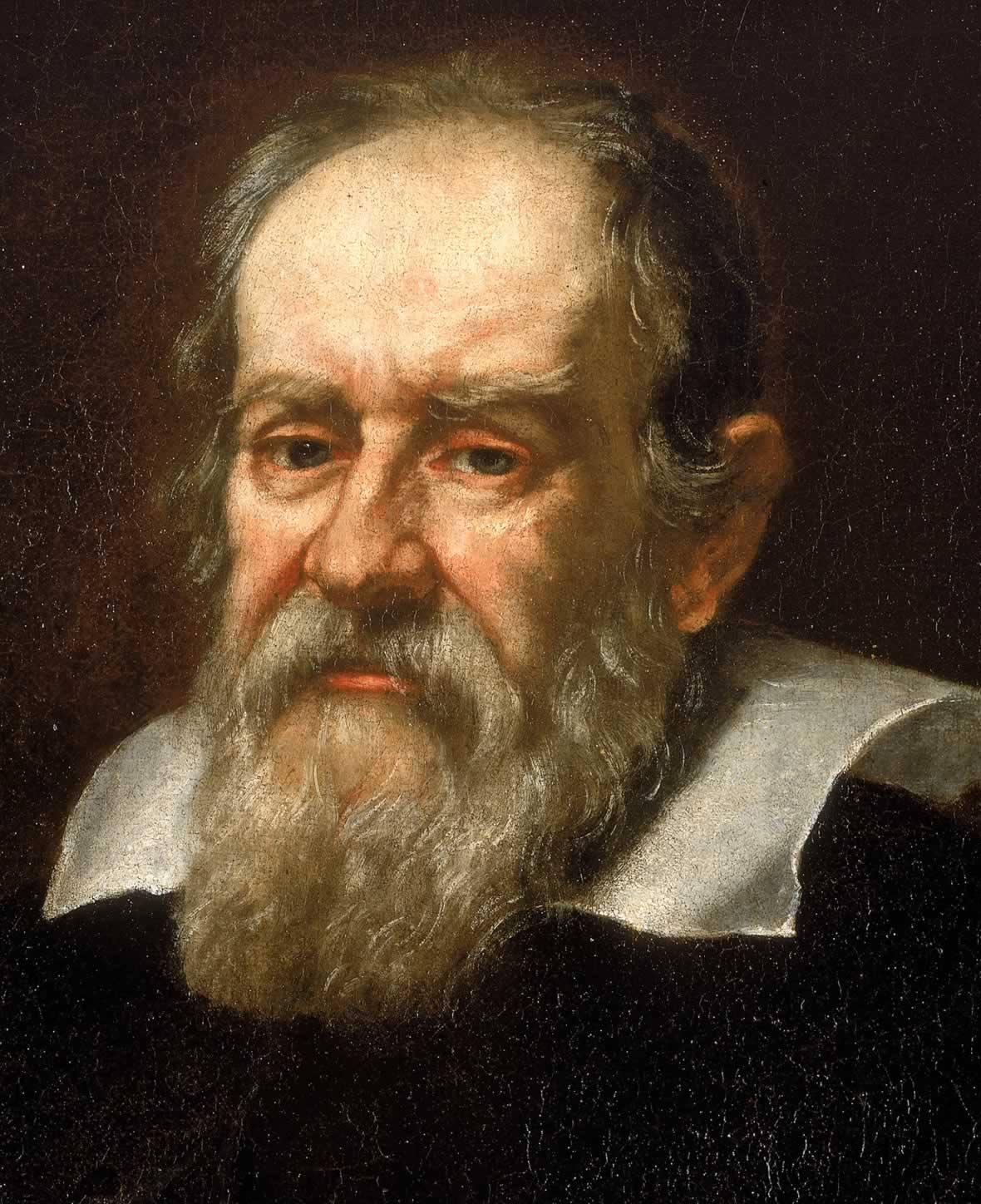
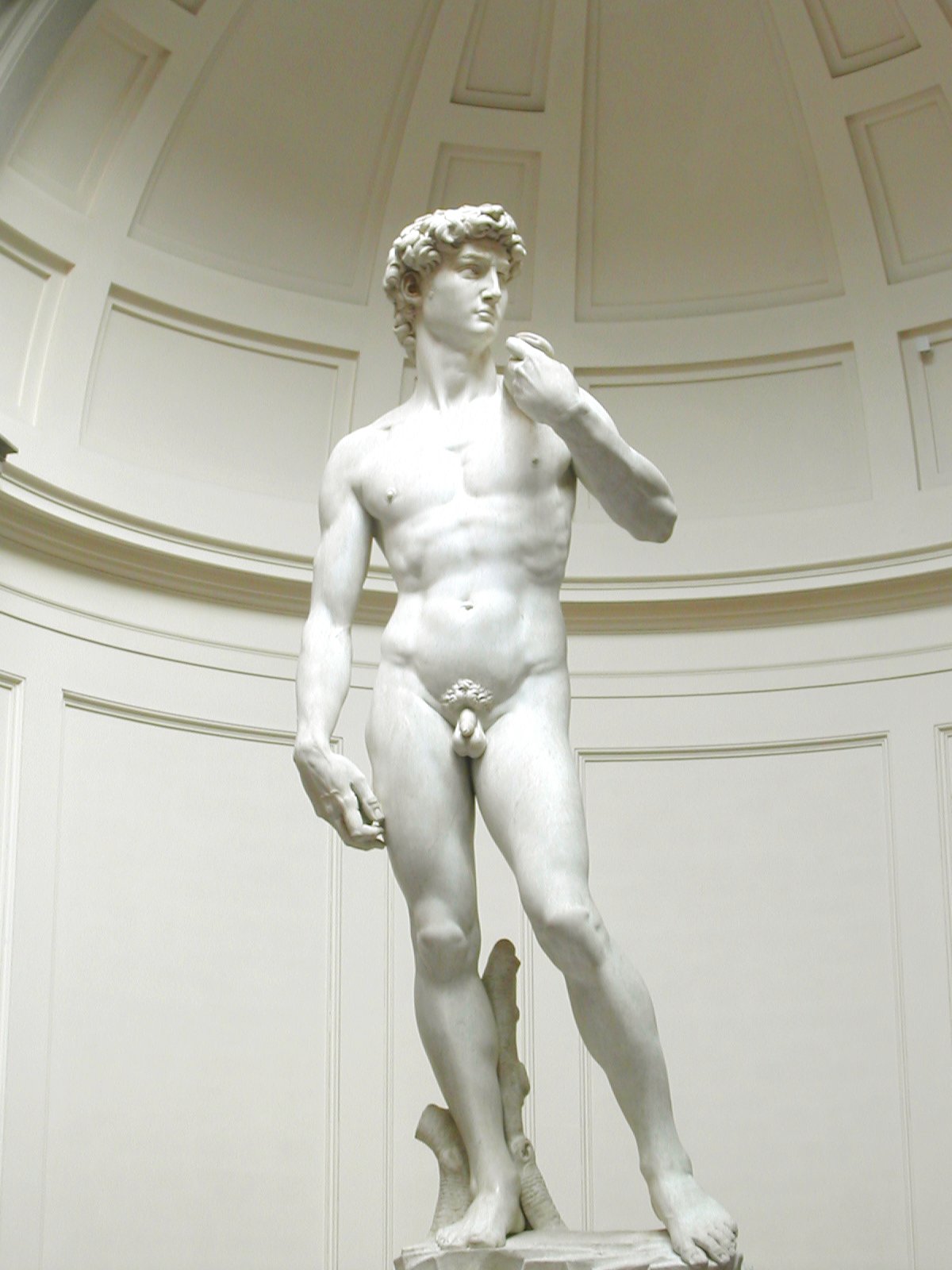
Customised search for historical information
Showing posts with label Italy. Show all posts

29 June 2012

On this day in history: Italian king assassinated, 1900

King Umberto I of Italy was born into the house of Savoy on 14th March 1844 and succeeded his father, Emmanuel II, in January 1878. Later that year the first attempt was made on Umberto's life when the anarchist Giovanni Passannante approached the king during a parade in Naples wielding a knife but Umberto warded off the attack with his sabre. The king commuted the resulting death sentence to one of penal servitude for the rest of Passannante's life.

This attack may have been part of a violent period of anarchist activity inspired by the tactic of 'propaganda by deed', which involved assassinations and bombings around the world. Umberto's conservatism and imperial ambitions made him a target, particularly following the Bava-Beccaris massacre of 1898.

This event was named after General Fiorenzo Bava-Beccaris, who ordered his troops to fire on a crowd demonstrating the rise in the price of bread in Milan. The volley of rifle and cannon fire killed between one- and four-hundred people, and injured up to one-thousand. Following the massacre, the king sent Bava-Beccaris a congratulatory telegram and later decorated him for his actions.

Across the Atlantic, an Italian immigrant living in Paterson, New Jersey, called Gaetano Bresci received news about the events in Milan. Bresci, a co-founder of the Italian language anarchist newspaper La Questione Social, decided to avenge the deaths of the demonstrators. In May 1900 he demanded the return of a loan from his comrades on the newspaper and, without a word of explanation, travelled back to his homeland to carry out the deed.

On the evening of 29th July 1900, Umberto was attending a sporting event in Monza where he had a villa. While handing out prizes to winning athletes, the king was approached by Bresci who ran out of the crowd, drew his pistol, and fired three times. Umberto died from the wounds almost instantly. Following his trial, Bresci received a sentence of a life of hard-labour, but was found hanged in his cell less than a year later. The official verdict was suicide, although many disputed this conclusion.
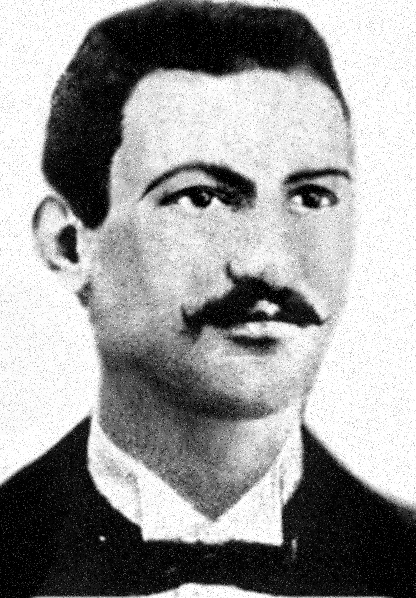
Gaetano Bresci

Related posts
Prince Murat executed: 13th October 1815
Wall Street Bombing: 16th September 1920

25 June 2012

On this day in history: First doctorate conferred on a woman, 1678

On 25th June 1678, the University of Padua conferred the first ever doctorate on a woman: Lady Elena Lucrezia Cornaro-Piscopia. She was born in the Palazzo Loredano, Venice, on 5th June 1646 to John Baptist Cornaro-Piscopia, Procurator of San Marco, and his wife Zanetta Giovanna Boni. At the age of seven Elena began her studies under the mentorship of the Aristotelian John Baptist Fabris. Fabris persuaded Elena's father to do all he could to further his daughter's education. Having the money and influence to do so he recruited Professor Alexander Anderson of Padua, Professor Luigi Gradenigo - the librarian at San Marco, and other tutors to school Lady Elena in a variety of disciplines. She became fluent in at least seven languages, including ancient Greek and latin, and because of this became known as Oraculum Septilingue. She also studied mathematics, astronomy, philosophy and theology - the latter two being her favourites.

In 1672 Lady Elena's father sent her to the University of Padua to complete her studies. Initially she had no intention of attaining academic qualifications, rather she simply wanted to continue learning. Nevertheless, because of her father's insistence and in spite of the resistance of some academics and churchmen, who would not permit a woman to become a Doctor of Theology, she was eventually allowed to prepare for the examination for Doctor of Philosophy with Professor Carlo Rinaldini as her tutor.

Six years later, the Cathedral in Padua hosted the public ceremony in which Lady Elena received the doctoral insignia: the laurel wreath placed on the head; the ring on the finger; and the ermine cape over her shoulders. In attendance were the professors of the University of Padua, invited academics from the Universities of Bologna, Ferrara, Perugia, Rome, and Naples, as well as other notable scholars and many of Venetian politicians.

Elena turned her back on the life of privilege and devoted herself to charitable works, becoming a Benedictine oblate. On 26th July 1684, eight years after receiving the doctorate, and at only thirty-eight years of age, Lady Elena Lucrezia Cornaro-Piscopia died of what is believed to have been tuberculosis. The whole city of Padua mourned the loss of this remarkable woman who continues to be remembered: a year after her passing the University of Padua struck a special medal in her honour; a statue of her still stands outside the University; and further afield, Vassar College, New York, has a stained glass window that depicts her presenting her thesis on that day Cathedral of Padua when she became the first woman to receive a doctorate.


Related posts
First university founded in Americas: 12th May 1551
First university inaugurated in Australia: 11th October 1852
First higher-education institute in Texas opened: 4th October 1871

8 May 2012

On this day in history: First Italian football championship, 1898

The first official Italian association football competition was played in entirety on 8th May 1898. The newly formed Italian Football Federation (Federazione Italiana Giuoco Calcio, or FIGC) endorsed the event. Earlier that decade there had been other football competitions staged, initially by teams of English emigrants and later by Italian teams; however, they played in separate leagues.

The city of Turin hosted the first FIGC sponsored competition and supplied three of the four competing teams: FBC Torinese, Ginnastica Torino, and Internazionale Torino. The fourth team and winners of the competition, the Genoa Cricket and Football Club, was the oldest in the country. The team included three Englishmen, one player from the Island of Guernsey and another from Switzerland.

To learn more about the story of Italian football see the FIGC history pages.

Related pages

Foundation of first Irish football club: 20th September 1879
First black international footballer: 12th March 1881
English Football Association legalises professionalism: 20th July 1885
First live radio broadcast of a soccer match: 22nd January 1927
Uruguay win first FIFA World Cup: 30th July 1930
First English club to win European Cup: 29th May 1968
Pelé scored his 1000th goal: 19th November 1969

12 April 2012

On this day in history: Galileo interrogated by the Inquisition, 1633

Following the publication of Dialogue Concerning the Two Chief World Systems, the Inquisition summoned Galileo Galilei to Rome for interrogation. Galileo had managed to alienate Pope Urban VIII by ridiculing Urban's geocentric opinions in the Dialogue, ending the protection that the Pontiff had previously given to Galileo. The insult was probably unintentional but it was enough for the Pope to allow the Inquisition to effectively charge Galileo with heresy. They charged him with promoting the Copernican idea that the Earth orbited the Sun, rather than being the centre of the Universe as per the orthodox geocentric view.

The interrogation began on 12th April, 1633, and lasted for until the 30th April. During the questioning, Galileo was detained in the Inquisition's building, albeit in luxurious apartments. Following a plea bargain where Galileo would recant some of his claims in return for a more lenient sentence, the Church officials sentenced him to house arrest, under which he remained for the rest of his life.

To learn more about Galileo see the Galileo Project website at Rice University.

Related posts
Foundation stone of Royal Greenwich Observatory laid: 10th August 1675
Neptune discovered: 23rd September 1846
Pluto discovered: 18th February 1930

12 January 2012

On this day in history: Sicilian Revolution of Independence, 1848

1848 was a year of revolution around the World, but particularly in Europe. The first uprising of that tumultuous year started on 12th January in Sicily. The Congress of Vienna, held in 1815 following the defeat of Napoleon, reunited the kingdoms of Naples and Sicily for the first time since the thirteenth century as the Bourbon Kingdom of the Two Sicilies.

The administration of the island was brutal, corrupt and inefficient. As a result many Sicilians longed for the liberal constitution of 1812, which the island's nobility had persuaded the beleaguered Bourbon court to accept while resident on the island, but which King Ferdinand I abolished following his restoration three years later. Dissatisfaction spilled over into open revolution three times between the creation of the kingdom in 1816 and 1848.

On 9th January 1848 political agitators in Palermo circulated a pamphlet written by Francesco Bagnasco, who had been active in the revolution of 1820, in which he called on all Sicilians to rise up against the Bourbons on January 12 - Ferdinand's birthday. Despite the arrest of eleven radicals on 10th January, the people took to the streets and following clashes with soldiers and police in which some demonstrators died they built barricades around Fieravecchia, Palermo's poorest quarter, where Baron Giuseppe La Masa formed a committee to direct the revolution.

The next day the rebel's ranks swelled when peasants and bands of brigands from the surrounding countryside joined the rebellion, while the six thousand Bourbon soldiers withdrew to the fortress of Castellamare from where they bombarded Palermo rather than face the inferior insurrectionary force in the city streets. The five thousand reinforcements who arrived on the 15th were not enough to prevent the revolutionaries taking control of the city and then the whole island, except the heavily fortified city of Messina, by the middle of February. Ferdinand had little choice but to negotiate with the revolutionary government, which now included many of the islands nobles.

Attempts at a diplomatic solution continued for the next eighteen months during which time the literate Sicilian males elected a parliament with Ruggero Settimo, the Prince of Castelnuovo, as president. Finally, in May 1849, Bourbon forces recaptured the island while over forty of the leaders of the revolution went into exile. Nevertheless, the forces unleashed by the Sicilian Revolution had an impact across Italy culminating in the unification of Italy ("il Risorgimento")") during the 1860s.

Related posts
Prince Murat executed: 13th October 1815
Frankfurt Parliament convened: 18th May 1848

30 November 2011

On this day in history: Capital punishment abolished in Tuscany, 1786

In 1765, Peter Leopold Joseph Anton Joachim Pius Gotthard succeeded his father, Holy Roman Emperor Francis I, as Grand Duke of Tuscany. For five years of his reign a group of counselors selected by his mother administered the Grand Duchy. Finally, in 1770 he visited Vienna and secured full control over Tuscany.

Peter Leopold set about reforming the Grand Duchy. Although he was unsuccessful in his attempt to secularise his state, he did remove many of the restrictions on commerce and personal freedom that the Medici had instituted and his father had left in place. He also started the process of drawing up a political constitution.

His enlightened attitudes extended to the punishment of criminals. After reading Cesare Beccaria's 1764 treatise on penal reform, Dei delitti e delle pene ("On Crimes and Punishments"), he started blocking the application of the death penalty, with no executions taking place after 1769. On 30th November 1786, he promulgated a reform that banned torture, abolished the death penalty and ordered the destruction of all instruments of capital punishment, making the Grand Duchy of Tuscany the first modern state to permanently abolish the death penalty.

Related posts
First execution in Salem witch trials: 10th June 1692
Last hanging at Tyburn gallows: 3rd November 1783
Guillotine used for first time: 25th April 1792
Rosenbergs executed: 19th June 1953
France abolished death penalty: 9th October 1981

1 November 2011

On this day in history: First aerial bombing, 1911

On 29th September 1911, the Italian government declared war on the Ottoman Empire having failed to achieve their demand for control of those Ottoman territories that make up modern day Libya. The conflict marked the first military use of airplanes. Initially the Italians used the new technology for reconnaissance, and later to attack Turkish troops.

On 1st November, Liuetenant Giulio Gavotti [pictured] set off on a reconnaissance flight over the Ain Zara oasis in his Taube ("dove") monoplane. He took with him four 2kg grenades with the intention of attacking the Turkish forces without the knowledge of his superiors. He dropped each of the bombs onto the enemy camp, but (thankfully) there were no casualties.

Related posts
Pink`s War began: 9th March 1925
First Zeppelin flight: 2nd July 1900

13 October 2011

On this day in history: Prince Murat executed, 1815

Born in La Bastide, Gascony in 1767, Joachim Murat was the son of an innkeeper who enlisted into the cavalry at the age of twenty. During the French Revolution he was a devoted republican, which may have played a role in his promotion to officer in 1792. Three years later, he played an important role in Napoleon Bonaparte's defence of the National Convention against a counter-revolutionary mob. He arrived in the nick of time with artillery that he had managed to safely collect from a Parisian suburb.

Murat served as Général Bonaparte's aide-de-camp during his campaign in northern Italy, before receiving promotion to commander of cavalry for Napoleon's campaigns against the Austrians and their allies, and for the Egyptian expedition. After returning to France with Napoleon, Murat married the Général's sister, Caroline, in 1800.

Four years later, Bonaparte became Marshall of France and a year later, in 1805, he made his brother-in-law a Prince of the Empire and bestowed further honours upon him over the next few years. In August 1808, Emperor Napoleon (as he had become) named Murat as King of Naples and Sicily. Nevertheless, following French defeat at the Battle of Leipzig in 1813, Murat allied himself with the Austrian Empire in order to protect his position as king.

When Murat learnt that the European Powers intended to restore the pre-Napoleonic monarchs to their thrones he moved north to attack the Austrian forces but suffered a defeat in the Battle of Tolentino in May 1815. He fled to Corsica after the fall of Napoleon and was arrested by forces of Ferdinand IV of Naples while trying to ferment revolt in Calabria. On 13th October 1815, Joachim Murat former King of the Two Sicilies and Grand Duke of Berg and Cleves was executed by firing squad at the Castello di Pizzo, Calabria.

To learn more see the web-site of the Friends of Murat Museum, which is based in his birthplace - the inn that his father ran in Labastide Murat (as it was renamed in his honour).

Related posts
Cisalpine Republic created: 29th June 1797
Napoleon escaped from Elba: 26th February 1815
Italian King assassinated: 29th July 1900

8 October 2011

On this day in history: San Marino adopted a written constitution, 1600

The Most Serene Republic of San Marino is a country in the Apennine mountains completely surrounded by Italy. The landlocked country takes its name from a Christian stonemason called Marinus (later made a saint) who, according to legend, founded what is probably the world's older republic in the fourth century. At various times the rulers of surrounding territories claimed the enclave as a fiefdom; however, San Marino's independence was confirmed by Papal decree in 1291.

On 8th October 1600, the country adopted a written constitution, the oldest of any country still in use. Written in latin it is called Statuta Decreta ac Ordinamenta Illustris Reipublicae ac Perpetuae Libertatis Terrae Sancti Marini. The constitution comprises six books: the first details the power of the councils, courts and other official positions; the second sets the salaries of civil servants, contains the procedures of civil law, and includes statutes regarding minors and their education; the third contains articles of criminal law and includes a formula for punishment to make it proportional to the crime; the fourth codifies the appointment of judges and other matters of jurisprudence; the fifth and sixth books deal with a variety of topics from weights and measures to the role of the father as head of the family.

Related posts
Constitution of Vermont abolished slavery: 7th July 1777
Declaration of the Rights of Man and of the Citizen: 26th August 1789
Cisalpine Republic created: 29th June 1797
Sicilian Revolution of Independence: 12th January 1848

13 September 2011

On this day in history: Michelangelo began work on his sculpture of David, 1501

In the mid-fifteenth-century the Operai - a group responsible for overseeing work on the cathedral of Santa Maria del Fiore in Florence - commissioned twelve large sculptures of Old Testament figures for the cathedral's buttresses. They arranged the purchase and transportation of a large piece of marble for a sculpture of David, King of the Israelites. The Operai first commissioned Agostini di Duccio and then Antonio Rossellino to work on the sculpture but neither made much progress, and the block, which became known as 'The Giant' lay outside the cathedral workshop for twenty-five years.

In 1501 the Operai decided to find an sculptor capable of turning 'The Giant' into a work of art. They consulted Leonardo da Vinci and others but the twenty-six year old Michaelangelo persuaded them to give him the commission. He received the official contract in August of that year and on 13th September he began work on the statue.

Michaelangelo worked on the statue for the next three years, producing a seventeen foot (5.17m) representation of a naked David at the moment he decided to fight Goliath. In January 1504, with the statue nearing completion, a committee of artists including da Vinci and Botticelli convened to decide the best location for the statue. Eventually they decided to a position in the entrance to the Palazzo Vecchio, the Florentine seat of government, where it was unveiled on 8th September 1504. The statue remained there until 1873 when it was relocated to the Accademia Gallery in the city. A replica was placed in its original position in 1910.

Related posts
Lincoln Memorial dedicated: 30th May, 1922
Work finished on Mount Rushmore sculpture: 31st October, 1941

29 July 2011

On this day in history: Italian King assassinated, 1900

King Umberto I of Italy was born into the house of Savoy on 14th March 1844 and succeeded his father, Emmanuel II, in January 1878. Later that year the first attempt was made on Umberto's life when the anarchist Giovanni Passannante approached the king during a parade in Naples wielding a knife but Umberto warded off the attack with his sabre. The king commuted the resulting death sentence to one of penal servitude for the rest of Passannante's life.

This attack may have been part of a violent period of anarchist activity inspired by the tactic of 'propaganda by deed', which involved assassinations and bombings around the world. Umberto's conservatism and imperial ambitions made him a target, particularly following the Bava-Beccaris massacre of 1898.

This event was named after General Fiorenzo Bava-Beccaris, who ordered his troops to fire on a crowd demonstrating the rise in the price of bread in Milan. The volley of rifle and cannon fire killed between one- and four-hundred people, and injured up to one-thousand. Following the massacre, the king sent Bava-Beccaris a congratulatory telegram and later decorated him for his actions.

Across the Atlantic, an Italian immigrant living in Paterson, New Jersey, called Gaetano Bresci received news about the events in Milan. Bresci, a co-founder of the Italian language anarchist newspaper La Questione Social, decided to avenge the deaths of the demonstrators. In May 1900 he demanded the return of a loan from his comrades on the newspaper and, without a word of explanation, traveled back to his homeland to carry out the deed.

On the evening 28th July 1900, Umberto was attending a sporting event in Monza where he had a villa. While handing out prizes to winning athletes, the king was approached by Bresci who ran out of the crowd, drew his pistol, and fired three times. Umberto died from the wounds almost instantly. Following his trial, Bresci received a sentence of a life of hard-labour, but was found hanged in his cell less than a year later - the official verdict was suicide although many disputed this conclusion.

Gaetano Bresci

Related posts
Prince Murat executed: 13th October 1815
Wall Street Bombing: 16th September 1920

29 June 2011

On this day in history: Cisalpine Republic created, 1797

In April 1792, France declared war on Austria beginning the French Revolutionary Wars, which lasted until 1802. Following initial defeats, the French army started to make gains against the coalition of nations that opposed them, in part due to the institution of the levée en masse (mass conscription) but also due to the tactical skills of the French generals. In 1796, one general in particular made a name for himself with a series of victories in northern Italy: Napoleon Bonaparte.

Following decisive victories at the Battle of Montenotte over the armies of Sardinia and Austria, and the defeat of the Austrians at the Battle of Lodi, Bonaparte captured Milan and Mantua. The Papal forces had little choice but to sue for peace, which he accepted in February 1797. With no belligerents left in northern Italy, Napoleon was free to take his army into Austria, but before he did so he created a two republics in captured territories as client states of France - the Cispadane Republic to the south of the River Po, and the Transpadane Republic north of the river. These republics comprised part of the Republic of Venice, the Romagna, the former duchies of Milan, Modena, and Parma, along with the Papal legations of Bologna and Ferrara

On 29th June 1797, Bonaparte merged the province of Novara with these two republics to form the Cisalpine Republic, which, although nominally independent, was effectively ruled from France. The promulgation of a constitution the very next month created a republic that followed the French model: they adopted the Republican calendar; the territories were divided up into departments; a minority of the populace elected representatives to two councils who chose an executive. Nevertheless, the commander of the occupying French forces retained ultimate authority. By the end of 1797, the Austrians had capitulated and signed the Treaty of Campo Formio by which they recognised the legitimacy of the Cisalpine Republic.

The fate of the Republic became intimately linked to that of its founder. Following his seizure of power in France, the Cisalpine Republic became the Italian Republic in 1802, with Bonaparte as its President. The year after Napoleon became Emperor of the French he added Venetia to the Republic to create the Kingdom of Italy and took the crown for himself. The Kingdom was broken up by the Congress of Vienna after his final defeat in 1815.

If you wish to learn more about Bonaparte and the Cisalpine Republic, Project Gutenberg has a copy of John Holland Rose's The Life of Napoleon I (London, 1910)

Related posts
Napoleon escaped from Elba: 26th February 1815
Prince Murat executed: 13th October 1815

25 June 2011

On this day in history: First doctorate conferred on a woman, 1678

On 25th June 1678, the University of Padua conferred the first ever doctorate on a woman: Lady Elena Lucrezia Cornaro-Piscopia. She was born in the Palazzo Loredano, Venice, on 5th June 1646 to John Baptist Cornaro-Piscopia, Procurator of San Marco, and his wife Zanetta Giovanna Boni. At the age of seven Elena began her studies under the mentorship of the Aristotelian John Baptist Fabris. Fabris persuaded Elena's father to do all he could to further his daughter's education. Having the money and influence to do so he recruited Professor Alexander Anderson of Padua, Professor Luigi Gradenigo - the librarian at San Marco, and other tutors to school Lady Elena in a variety of disciplines. She became fluent in at least seven languages, including ancient Greek and latin, and because of this became known as Oraculum Septilingue. She also studied mathematics, astronomy, philosophy and theology - the latter two being her favourites.

In 1672 Lady Elena's father sent her to the University of Padua to complete her studies. Initially she had no intention of attaining academic qualifications, rather she simply wanted to continue learning. Nevertheless, because of her father's insistence and in spite of the resistance of some academics and churchmen, who would not permit a woman to become a Doctor of Theology, she was eventually allowed to prepare for the examination for Doctor of Philosophy with Professor Carlo Rinaldini as her tutor.

Six years later, the Cathedral in Padua hosted the public ceremony in which Lady Elena received the doctoral insignia: the laurel wreath placed on the head; the ring on the finger; and the ermine cape over her shoulders. In attendance were the professors of the University of Padua, invited academics from the Universities of Bologna, Ferrara, Perugia, Rome, and Naples, as well as other notable scholars and many of Venetian politicians.

Elena turned her back on the life of privilege and devoted herself to charitable works, becoming a Benedictine oblate. On 26th July 1684, eight years after receiving the doctorate, and at only thirty-eight years of age, Lady Elena Lucrezia Cornaro-Piscopia died of what is believed to have been tuberculosis. The whole city of Padua mourned the loss of this remarkable woman who continues to be remembered: a year after her passing the University of Padua struck a special medal in her honour; a statue of her still stands outside the University; and further afield, Vassar College, New York, has a stained glass window that depicts her presenting her thesis on that day Cathedral of Padua when she became the first woman to receive a doctorate.


Related posts
First university founded in Americas: 12th May 1551
First university inaugurated in Australia: 11th October 1852
First higher-education institute in Texas opened: 4th October 1871

8 May 2011

On this day in history: First Italian football championship, 1898

The first official Italian association football competition was played in entirety on 8th May 1898. The newly formed Italian Football Federation (Federazione Italiana Giuoco Calcio, or FIGC) endorsed the event. Earlier that decade there had been other football competitions staged, initially by teams of English emigrants and later by Italian teams; however, they played in separate leagues.

The city of Turin hosted the first FIGC sponsored competition and supplied three of the four competing teams: FBC Torinese, Ginnastica Torino, and Internazionale Torino. The fourth team and winners of the competition, the Genoa Cricket and Football Club, was the oldest in the country. The team included three Englishmen, one player from the Island of Guernsey and another from Switzerland.

To learn more about the story of Italian football see the FIGC history pages.

Related pages

Foundation of first Irish football club: 20th September 1879
First black international footballer: 12th March 1881
English Football Association legalises professionalism: 20th July 1885
First live radio broadcast of a soccer match: 22nd January 1927
Uruguay win first FIFA World Cup: 30th July 1930
First English club to win European Cup: 29th May 1968
Pelé scored his 1000th goal: 19th November 1969

12 April 2011

On this day in history: Galileo interrogated by the Inquisition, 1633

Following the publication of Dialogue Concerning the Two Chief World Systems, the Inquisition summoned Galileo Galilei to Rome for interrogation. Galileo had managed to alienate Pope Urban VIII by ridiculing Urban's geocentric opinions in the Dialogue, ending the protection that the Pontiff had previously given to Galileo. The insult was probably unintentional but it was enough for the Pope to allow the Inquisition to effectively charge Galileo with heresy. They charged him with promoting the Copernican idea that the Earth orbited the Sun, rather than being the centre of the Universe as per the orthodox geocentric view.

The interrogation began on 12th April, 1633, and lasted for until the 30th April. During the questioning, Galileo was detained in the Inquisition's building, albeit in luxurious apartments. Following a plea bargain where Galileo would recant some of his claims in return for a more lenient sentence, the Church officials sentenced him to house arrest, under which he remained for the rest of his life.

To learn more about Galileo see the Galileo Project website at Rice University.

Related posts
Foundation stone of Royal Greenwich Observatory laid: 10th August 1675
Neptune discovered: 23rd September 1846
Pluto discovered: 18th February 1930

22 February 2011

The Year of Revolution: 1848

In a break from the 'On this day in history' series, I am taking inspiration from recent events in Tunisia, Egypt, Bahrain and Libya. This year has seen a wave of revolutions in North Africa and Arabia, but it was Europe that rocked with demands for freedom in 1848. While many of these revolutions failed in the short term, they marked a sea change in European politics.

The year 1848 began with the Sicilian Revolution of Independence, which began on 12th January. This was the third popular rebellion against King Ferdinand II seeking the restoration of the liberal constitution of 1812. Negotiations between the monarch and revolutionaries dragged on for eighteen months before the king's forces finally recaptured the island.

The people of other Italian states also rose up against their rulers, notably in the Kingdom of Lombardy–Venetia, then part of the Hapsburg Austrian Empire. The people of Milan and Venice instituted provisional governments, both of which were eventually defeated by the Austrians. These risings, along with the timely constitutional reforms in the Kingdom of Piedmont-Sardinia, laid the foundations for Italian unification.

Nationalist uprisings occurred elsewhere in the Hapsburg Empire. In March, Magyar nationalists forced Emperor Ferdinand to grant them a constitution and a government. This government ensured Magyar domination of Hungary, resulting in a further uprising of Slovaks in Upper Hungary starting in September, 1848.

The March Revolution in Germany resulted in the short-lived Frankfurt Parliament. This experiment in German unification failed because of the absence of national institutions and the lack support from the King Frederick William IV of Prussia. The final straw was when he turned down the offer of becoming Emperor of the Germans.

The Prussian king faced an uprising in his Polish possessions. In March, a Polish National Committee formed in the Grand Duchy of Poznań, taking inspiration from events in Germany. While the committee negotiated reforms with the Prussians and other Germans, the leader of the Polish militia ignored orders to disarm. This decision resulted in military confrontation with the Prussians whose victory ended any hope of Polish autonomy.

In modern day Romania, Imperial Russian faced liberal nationalist uprisings in Wallachia and Moldavia. Russian troops quickly put down the Moldavian revolt, before turning their attentions to neighbouring Wallachia. With help from the Ottoman Empire the Russians restored their joint hegemony over Danubian Principalities.

1848 saw another revolution in France, the third in less than sixty years. A financial crisis and King Louis Philippe's increasingly conservative policies resulted in a popular uprising in February. The king abdicated and fled to Britain, leaving the way clear for the establishment of the Second Republic.

Further uprisings happened in Belgium, Denmark, Ireland and Schleswig. As with those already detailed, these revolts made little difference in the immediate aftermath, but all these revolutions set the scene for political change in the rest of the nineteenth- and the early twentieth-century. It remains to be seen whether the revolutions in North Africa and Arabia will follow this model of eventual reform, or whether they will quickly establish new governments that endure.

12 January 2011

On this day in history: Sicilian Revolution of Independence, 1848

1848 was a year of revolution around the World, but particularly in Europe. The first uprising of that tumultuous year started on 12th January in Sicily. The Congress of Vienna, held in 1815 following the defeat of Napoleon, reunited the kingdoms of Naples and Sicily for the first time since the thirteenth century as the Bourbon Kingdom of the Two Sicilies.

The administration of the island was brutal, corrupt and inefficient. As a result many Sicilians longed for the liberal constitution of 1812, which the island's nobility had persuaded the beleaguered Bourbon court to accept while resident on the island, but which King Ferdinand I abolished following his restoration three years later. Dissatisfaction spilled over into open revolution three times between the creation of the kingdom in 1816 and 1848.

On 9th January 1848 political agitators in Palermo circulated a pamphlet written by Francesco Bagnasco, who had been active in the revolution of 1820, in which he called on all Sicilians to rise up against the Bourbons on January 12 - Ferdinand's birthday. Despite the arrest of eleven radicals on 10th January, the people took to the streets and following clashes with soldiers and police in which some demonstrators died they built barricades around Fieravecchia, Palermo's poorest quarter, where Baron Giuseppe La Masa formed a committee to direct the revolution.

The next day the rebel's ranks swelled when peasants and bands of brigands from the surrounding countryside joined the rebellion, while the six thousand Bourbon soldiers withdrew to the fortress of Castellamare from where they bombarded Palermo rather than face the inferior insurrectionary force in the city streets. The five thousand reinforcements who arrived on the 15th were not enough to prevent the revolutionaries taking control of the city and then the whole island, except the heavily fortified city of Messina, by the middle of February. Ferdinand had little choice but to negotiate with the revolutionary government, which now included many of the islands nobles.

Attempts at a diplomatic solution continued for the next eighteen months during which time the literate Sicilian males elected a parliament with Ruggero Settimo, the Prince of Castelnuovo, as president. Finally, in May 1849, Bourbon forces recaptured the island while over forty of the leaders of the revolution went into exile. Nevertheless, the forces unleashed by the Sicilian Revolution had an impact across Italy culminating in the unification of Italy ("il Risorgimento")") during the 1860s.

Related posts
Prince Murat executed: 13th October 1815
Frankfurt Parliament convened: 18th May 1848

30 November 2010

On this day in history: Capital punishment abolished in Tuscany, 1786

In 1765, Peter Leopold Joseph Anton Joachim Pius Gotthard succeeded his father, Holy Roman Emperor Francis I, as Grand Duke of Tuscany. For five years of his reign a group of counsellors selected by his mother administered the Grand Duchy. Finally, in 1770 he visited Vienna and secured full control over Tuscany.

Peter Leopold set about reforming the Grand Duchy. Although he was unsuccessful in his attempt to secularise his state, he did remove many of the restrictions on commerce and personal freedom that the Medici had instituted and his father had left in place. He also started the process of drawing up a political constitution.

His enlightened attitudes extended to the punishment of criminals. After reading Cesare Beccaria's 1764 treatise on penal reform, Dei delitti e delle pene ("On Crimes and Punishments"), he started blocking the application of the death penalty, with no executions taking place after 1769. On 30th November 1786, he promulgated a reform that banned torture, abolished the death penalty and ordered the destruction of all instruments of capital punishment, making the Grand Duchy of Tuscany the first modern state to permanently abolish the death penalty.

Related posts
First execution in Salem witch trials: 10th June 1692
Last hanging at Tyburn gallows: 3rd November 1783
Guillotine used for first time: 25th April 1792
Rosenbergs executed: 19th June 1953
France abolished death penalty: 9th October 1981

1 November 2010

On this day in history: First aerial bombing, 1911

On 29th September 1911, the Italian government declared war on the Ottoman Empire having failed to achieve their demand for control of those Ottoman territories that make up modern day Libya. The conflict marked the first military use of airplanes. Initially the Italians used the new technology for reconnaissance, and later to attack Turkish troops.

On 1st November, Liuetenant Giulio Gavotti [pictured] set off on a reconnaissance flight over the Ain Zara oasis in his Taube ("dove") monoplane. He took with him four 2kg grenades with the intention of attacking the Turkish forces without the knowledge of his superiors. He dropped each of the bombs onto the enemy camp, but (thankfully) there were no casualties.

Related posts
Pink`s War began: 9th March 1925
First Zeppelin flight: 2nd July 1900

13 October 2010

On this day in history: Prince Murat executed, 1815

Born in La Bastide, Gascony in 1767, Joachim Murat was the son of an innkeeper who enlisted into the cavalry at the age of twenty. During the French Revolution he was a devoted republican, which may have played a role in his promotion to officer in 1792. Three years later, he played an important role in Napoleon Bonaparte's defence of the National Convention against a counter-revolutionary mob. He arrived in the nick of time with artillery that he had managed to safely collect from a Parisian suburb.

Murat served as Général Bonaparte's aide-de-camp during his campaign in northern Italy, before receiving promotion to commander of cavalry for Napoleon's campaigns against the Austrians and their allies, and for the Egyptian expedition. After returning to France with Napoleon, Murat married the Général's sister, Caroline, in 1800.

Four years later, Bonaparte became Marshall of France and a year later, in 1805, he made his brother-in-law a Prince of the Empire and bestowed further honours upon him over the next few years. In August 1808, Emperor Napoleon (as he had become) named Murat as King of Naples and Sicily. Nevertheless, following French defeat at the Battle of Leipzig in 1813, Murat allied himself with the Austrian Empire in order to protect his position as king.

When Murat learnt that the European Powers intended to restore the pre-Napoleonic monarchs to their thrones he moved north to attack the Austrian forces but suffered a defeat in the Battle of Tolentino in May 1815. He fled to Corsica after the fall of Napoleon and was arrested by forces of Ferdinand IV of Naples while trying to ferment revolt in Calabria. On 13th October 1815, Joachim Murat former King of the Two Sicilies and Grand Duke of Berg and Cleves was executed by firing squad at the Castello di Pizzo, Calabria.

To learn more see the web-site of the Friends of Murat Museum, which is based in his birthplace - the inn that his father ran in Labastide Murat (as it was renamed in his honour).

Related posts
Cisalpine Republic created: 29th June 1797
Napoleon escaped from Elba: 26th February 1815
Italian King assassinated: 29th July 1900