On 6th July 1947, the most iconic weapon of the second half of the twentieth century entered production at the Izhevsk Mechanical Works. The Kalashnikov AK-47 7.62 mm automatic assault rifle takes its name from its creator Mikhail Kalashnikov and the year of its design. Originally designed for the Red Army, who introduced it in 1949, the AK-47 has appeared as many variants in Russia and from other countries, which have made it under license up to the present-day.
Worldwide, more AK-47s have been produced then any other comparable rifle. Its durability and ease of use mean it became the ubiquitous weapon of civil wars, revolutionary struggles and insurgencies around the world. Revolutionaries have adopted it as a quintessential symbol of liberation through armed struggle, as seen in the flags of Mozambique and Hezbollah.
To learn more about this iconic weapon and its designer see the AK site.
Related posts
First machine-gun patented: 15th May 1718
6 July 2012
On this day in history: AK-47 entered production, 1947


5 July 2012
On this day in history: Venezuelan Declaration of Independence, 1811
 The Napoleonic Wars in Europe resulted in a power vacuum in Spain, which provided an opportunity for the independence movements in Spain's South America colonies. In April 1810, the cabildo (municipal council) of Caracas seized control of the provincial government in the name of King Ferdinand VII, who Napoleon Bonaparte had deposed and imprisoned in France. The municipal governments in the capital cities of the other Venezuelan provinces followed Caracas' lead.
In March 1811, representatives from the provinces convened at the First Venezuelan Congress and soon began to debate whether they should become an independent state. Under the leadership of Francisco de Miranda and Simón Bolívar the independence movement was victorious, and on 5th July 1811, the Congress delivered a Declaration of Independence to create the American Confederation of Venezuela (more commonly known as the First Republic of Venezuela). Almost immediately Venezuela plunged into a twelve year civil war between republicans and royalists who wanted to remain under Spanish control.
In 1812, the republic collapsed due to internal disputes, a Spanish blockade and a major earthquake. Nevertheless, it was re-established by Bolívar in the following year, but it lasted less than twelve months. Eventually, in 1823 the republicans defeated the forces of a resurgent Spain and achieved Venezuelan independence within a larger federal state, Gran Colombia, which declared had independence in 1819 and comprised other Spanish colonies including present-day Colombia, Ecuador and Panama and parts of of Brazil, Costa Rica, Guyana and Peru.
The texts of the Venezuelan Declaration of Independence and Constitution of 1811 are both available in Spanish and English at the Rice University Digital Scholarship Archive.
Related posts
Peruvian independence declared: 28th July 1821
Philippine Declaration of Independence from Spain: 12th June 1898
1 July 2012
On this day in history: Nuclear Non-Proliferation Treaty signed, 1968
 In November 1959, the Irish Minister for External Affairs, Frank Aiken, first proposed an international agreement to halt the increase in nations with nuclear weapons with a view to eventual disarmament. This United Nations General Assembly adopted the proposal in resolution 1380 (XIV), which suggested
.. that the ten-nation disarmament committee [...] should consider appropriate means whereby this danger may be averted, including the feasibility of an international agreement, subject to inspection and control, whereby the Powers producing nuclear weapons would refrain from handing over control of such weapons to any nation not possessing them and whereby the Powers not possessing such weapons would refrain from manufacturing them.The next year, again by the initiative of Aiken, the UN General Assembly adopted resolution 1576 (XV) that called upon the countries with nuclear weapons to voluntarily halt the proliferation of such devices.
In 1961, the Assembly adopted a further two resolutions: the first, 1664 (XVI), initiated by Sweden about the conditions of the agreement; the second, 1665 (XVI), was another Irish initiative to put the onus on those states with nuclear weapons to conclude an agreement. In 1965, three years after the world was brought to the brink of nuclear war during the Cuban Missile Crisis, the USA and then USSR both submitted draft treaties to the United Nations Disarmament Committee. That same year, eight non-aligned states initiate the adoption of resolution 2028 (XX), which listed the five principles that would form the basis of the treaty. The next year the United Nations General Assembly adopted two more resolutions to maintain the momentum towards the goal of an agreement: 2149 (XXI) and 2153 (XXI).
In August 1967, the USA and USSR separately submit draft treaties with identical texts, and in December of that year the UN General Assembly adopts another resolution, 2346 (XXII), requesting that the Eighteen-Nation Committee on Disarmament report on its progress by March 1968. Two months before the report is due the USA and USSR submit a joint draft treaty, which, after a few amendments, is adopted by the Assembly in resolution 2373 (XXII).
On 1st July 1968, at separate ceremonies in London, Moscow and New York, representatives from sixty-two nations signed the treaty. Nevertheless, the treaty was not immediately brought into force. Various governments, including those of the Soviet Union and United States, needed to ratify the treaty. This process stalled because of the Russian invasion of Czechoslovakia, and was not completed until 5th March 1970 when the treaty finally came into effect. Today, 189 countries are party to the treaty with four notable exceptions: India; Israel; Pakistan; and, North Korea. The first three never ratified the treaty, whereas North Korea ratified it in 1985 but later withdrew.
The United Nations Office for Disarmament Affairs website includes a page dedicated to the Non-Proliferation Treaty, which makes the text of the treaty available to download in pdf format in various languages.
Related posts
Rosenbergs executed: 19th June 1953
Nuclear Disarmament logo designed: 21st February 1958
First French nuclear test: 13th February 1960
Stanislav Petrov averted a nuclear war: 26th September 1983
28 June 2012
On this day in history: Battle of Berestechko begins, 1651
 In the mid-seventeenth century, one of the largest and most populace states in Europe was the Polish-Lithuanian Commonwealth (also known by the rather delightful name 'Most Serene Commonwealth of the Two Nations'). This elective monarchy extended from Poznan in the west to Smolensk in the east; it included Latvia and much of modern day Estonia, Belarus and Ukraine. As such the Commonwealth's population consisted of many ethnic groups, not all of whom were content to be ruled by a Polish-Lithuanian monarch.
In 1648, a number of ethnic groups within the Ukraine rebelled against the Roman Catholic King John II Casimir. Initiated by Cossacks the war of liberation soon attracted their fellow Orthodox Christians: Ukrainian peasants and Crimean Tatars. The rebels - commanded by Bohdan Khmelnytskyi, a Zaporozhian Cossack who gave his name to the uprising - managed to drive the Polish nobles, Catholic priests, and Jewish leaseholders from their land in the first few months of the insurgency - massacring those who did not flee. Meanwhile, the King was building an army to take back the Ukraine.
On 28th June 1651, the largest battle of the seventeenth century began when approximately 140,000 rebels engaged just over 50,000 Commonwealth soldiers under the command of the king at Berestechko in the western Ukraine. The battle lasted for three days by the end of which between forty- and seventy-thousand rebels lay dead (including women and children at their camp), while the Polish-Lithuanian army had lost less than one-thousand men. The rebels were forced to capitulate and signed the Treaty of Bila Tserkva on 28th September.
In spite of the defeat, Khmelnytskyi (aka Chmielnicki) had not given up hope of forcing the Commonwealth out of the Ukraine, but he realised that he needed allies to do so. Initially he approached the Ottoman Sultan who offered the rebels vassal status; however, the Ukrainians were not keen on a Muslim overlord. So it was that Khmelnytskyi signed the Treaty of Pereyaslav in 1654, making the Ukraine a vassal state of the co-religionist Russian Tsar, finally ending Polish-Lithuanian domination of the Ukraine.
Related posts
Ivan the Terrible crowned Tsar: 16th January 1547
Foundation of Saint Petersburg: 27th May 1703
26 June 2012
On this day in history: First Victoria Crosses presented, 1857
 During the state opening of Parliament in 1854 Queen Victoria praised her forces currently engaged in the Crimean War leading Capt. G.T. Scobell, M.P, to suggest...
[...] that an humble address be presented to Her Majesty to institute an 'Order of Merit' to be bestowed upon persons serving in the Army or Navy for distinguished and prominent personal gallantry during the present war and to which every grade and individual... may be admissible.
In March 1855 the Government announced that such an order of merit would be instituted. Queen Victoria herself had a role in approving the text of the Warrant and the design of the medal, which was finally settled upon in March 1856. Mr C.F. Hancock, a London jeweller, was given the appointment to produce 106 specimens. The medal was to be made from the bronze of Chinese cannons seized from the Russians at the siege of Sebastopol in 1855 (although analysis confirms that through the years different sources of metal have been used).
The first presentation was made in Hyde Park on 26th June 1857 where Queen Victoria decorated 62 servicemen for showing valour "in the face of the enemy" during the Crimean War. The first recipient was Commander Henry Raby RN who was recognised for his part in rescuing a wounded soldier while under fire during an attack on the Redan on 18th June 1855. Fourth in line was Charles Davis Lucas, a mate in the Royal Navy who, three years earlier, had thrown a live shell overboard after it landed on deck of his ship, the HMS Hecla. This act of bravery was the earliest to have been rewarded with the medal. The VC remains the highest military decoration awarded in the United Kingdom.
The Victoria Cross Society website includes a biography of Charles Lucas on its page of sample journal articles.
Related posts
Queen Victoria`s first train journey: 13th June 1842
14 June 2012
On this day in history: Ottomans conquered the Kingdom of Sennar, 1821
 The Kingdom of Sennar was created at the dawn sixteenth-century when the Funj people led by Amara Dunqas conquered much of modern day Sudan. About twenty years later the Amara Dunqas converted from a fusion of Christianity and animism to Islam and took the title Sultan. Later that century Sennar reached its peak, having conquered many of its neighbours and posing a credible threat to Ethiopia to the south and Egypt to the north.
The seventeenth century was a period of slow decline for the Sultanate, as the monarch lost control of the economy, due to an influx of foreign currency, and the law, as Islamic legal scholars asserted their authority. Between 1769 and 1788 the Sultans were merely puppets of the Hamaj who following a successful revolt held the reigns of power as regents. As the sultans struggled to re-establish their rule and the regents fought to maintain their hold over the running of the country, the country became weakened and a target for the imperial ambitions of foreign powers.
In 1821, the army of general Ismail bin Muhammed Ali, son of the khedive of Ottoman Egypt, invaded Sennar. The forces of the Sultan, Badi VII, offered no resistance and on 14th June surrendered to Ismail, offering gifts and then having to watch the Ottoman troops loot his capital. Badi was restored as nominal rule of his lands, which were henceforth part of the Ottoman Empire.
Related posts
Shortest war in history: 27th August 1896
Fouad became King of Egypt: 15th March 1922
9 June 2012
On this day in history: Raid on the Medway, 1667
 The Restoration of the Stuart monarchy in Britain in 1660 did not mean an end to all of the policies of Oliver Cromwell and the Commonwealth, especially with regard to trade. At that time the United Provinces of the Netherlands dominated world trade, a position that the English regarded with jealous eyes. Trade disputes - mainly caused by restrictions on foreign trade to English ports brought about by the Navigation Act of 1651 - and the English use of privateers to search Dutch merchantmen brought the two countries into open conflict during Cromwell's reign.
The First Anglo-Dutch War lasted from March 1652 to May 1654. Fought entirely at sea it resulted in an English victory. As part of the Treaty of Westminster, the Dutch reluctantly recognised the Navigation Act; however, the underlying issues that brought the countries to war had not been resolved. The Dutch response to a series of diplomatic incidents and English attacks on Dutch colonies and shipping provided the pretext for the English to declare war on 4th March 1665.
As with the first war, the fighting was limited to naval engagements; mostly confined to the North Sea. The initial English successes did not provide the decisive victory required to force another capitulation from the Dutch. Indeed, the strength of the reconstructed Dutch navy and their financial might meant that as the war dragged on into 1667, the British king, Charles II, struggled to find the money to maintain his navy. As a result of this, he decided to moor his largest ships at Chatham Docks, on the River Medway, while he negotiated with the Dutch and conducted secret talks with the French for extra funds. Meanwhile, the Dutch made plans to end the war with a decisive blow: an amphibious assault on Chatham Docks.
The plan was hatched by the Dutch statesman, Johan de Witt, whose brother Cornelis accompanied the force with the sealed orders for the attack - secrecy being of the utmost importance. Late in the day on 9th June 1667, the English sighted thirty ships entering the Thames Estuary. The attacking fleet carried around one-thousand marines, who captured strategic positions at Canvey Island and Sheerness on either side of the mouth of the river. Over the next few days the Dutch fought their way up the Thames and then the Medway removing the ships sunk by the English to impede their progress. On 12th June, the Dutch engaged the Royal Navy ships defending the chain at Gillingham, which protected the docks. Once they captured the HMS Unity and destroyed the Matthias and Charles V with a fireships, the docks were at their mercy.
In response, the Royal Navy sank the ships further up the river to prevent their capture - in total they sank thirty of their own ships during the raid. The Dutch seamen continued to fight their way into the docks until their withdrawal on the 14th June. The mission was a complete success, the Dutch destroyed fifteen ships and sailed away with two more, including the pride of the English fleet: HMS Royal Charles. With his Navy in tatters, King Charles II was left with little choice but to sue for peace. A month later his representatives signed the Treaty of Breda, which granted the Dutch possession of some of the territories they captured during the war, concessions regarding the Navigation Act, and also freed up their forces just as the French invaded the Spanish Netherlands to their south.
You can read a contemporary account of the raid in the Diary of Samuel Pepys available at Project Gutenberg.
Related posts
Battle of St George`s Caye: 10th September 1798
British capture of Hong Kong, 23rd August 1839
Shortest war in history: 27th August 1896
27 May 2012
On this day in history: Foundation of Saint Petersburg, 1703
 For the first twenty years of the eighteenth century Russia and Sweden fought a war for supremacy over the Baltic Sea. On 1st May 1703, the forces of the Russian Tsar, Peter the Great, captured Nyenskans, a Swedish fortress that protected the mouth of the Neva river on the coast of the Gulf of Finland. To further protect this strategically important location, Peter decided to build a fortress city further down the river at Zayachii ostrov (Hare Island).
Work on the Peter and Paul Fortress started a few weeks later, on 27th May 1703. Initially comprising six bastions constructed of earth and timber it was later replaced by a stone building. This citadel never saw military action, but rather became the centre of the city of St. Petersburg - named after the apostle Peter.
The Tsar conscripted serfs from across Russia to work on the city, which quickly grew around Trinity Square on the right bank of the Neva. The city was the centrepiece of Peter's modernisation programme and as such he made it his capital in 1712, an honour the city enjoyed for over two hundred years, except for one four-year period (1728-32) when Peter II made Moscow his capital.
Related posts
Ivan the Terrible crowned Tsar: 16th January 1547
Battle of Berestechko begins: 28th June 1651
Tucson, Arizona founded: 20th August 1775
15 May 2012
On this day in history: First machine-gun patented, 1718
 The son of a merchant of the same name, James Puckle was born sometime in or before 1667 in London. He inherited his father's estate in 1690 to add to the wealth he accrued as a notary public and a stock-jobber. He published pamphlets on trade and a series of prose dialogues describing various members of a fictitious club, which was republished many times after his death in 1724. But it is his design for a portable breech-loading machine gun for which he is best remembered.
On 15th May 1718 he took out a patent for the weapon, which was fired by flintlock. It was mounted on a tripod (making it portable), and could have various six-chambered breeches attached so that it could fire round bullets at Christian targets, and - for some reason - square bullets at Turks. The firer rotated a the breech with a handle, very much like the later Gatling Gun.
Like so many inventions that arrived before their time, Puckle's Defence Gun was lampooned and failed to attract investment, even though it was successfully demonstrated. According to the London Journal of 31st March 1722, ‘one man discharged it 63 times in seven minutes’ in the pouring rain. The second duke of Montagu took two of the machine-guns to St. Lucia during his failed attempt to take control of the island.
If you wish to learn more about the Defender Gun, the Wedmore family history web site has a page with details of the patent , and the Royal Armouries museum in Leeds has an example of the machine-gun in its collection.
Related posts
AK-47 entered production: 6th July 1947
17 April 2012
On this day in history: Bay of Pigs, 1961
 On the morning of 17th April, 1961, a force of Cuban counter-revolutionary exiles, known as Brigade 2506, landed at the Bay of Pigs in an attempt to overthrow Fidel Castro's regime. The attack was carried out with the support of the United States of America: the plan having been drafted by the C.I.A. while Dwight D. Eisenhower was still President, but was carried out during John F. Kennedy's presidency. Kennedy required the original plan to be scaled back, so that it the attack would look less like a U.S. military operation and more like an operation that the exiles could plausibly carry out.
Following an attack by light bombers of the exile air force, launched from Nicaragua on Cuban airfields, the main assault on the Bay of Pigs began. The failure of the air attack to destroy the Cuban air force resulted in the surviving planes wreaking havoc on the counter-revolutionary invasion force and their air support. Fighting continued, as a 20,000 strong Cuban force repulsed the invading troops, leading to the collapse of the attack on 19th April.
The failed invasion caused a rapid deterioration of diplomatic relations between the U.S. and Cuban governments, which worsened during the Cuban Missile Crisis of the following year, and have improved little in successive decades.
To find out more about the Bay of Pigs Invasion, read the original New York Times report on the attack, and the article about the invasion on the JFK Library and Museum web site.
Related posts
First Cuban world boxing champion: 15th July 1931
John F. Kennedy inaugurated as President: 20th January 1961
Bobby Kennedy assassinated: 5th June 1968
Stanislav Petrov averted a nuclear war: 26th September 1983
16 April 2012
On this day in history: Battle of Culloden, 1746
Following the 'Glorious Revolution' of 1688, some Britons, known as Jacobites, wanted James II restored to the throne. After James' death in 1701, the Jacobite cause shifted to his son, also called James but commonly known as 'the Old Pretender'. There were two major Jacobite risings in Britain in 1715 and 1745. Both of these rebellions began with the Highlanders in the north of Scotland with whom the Stuart cause was still popular.
The 'Fifteen' (as the 1715 revolt was known) began when the Earl or Mar raising the Highland Clans in insurrection and ended when the 'Old Pretender', following the advice of his counsellors, abandoned his troops and returned to exile in France. Thirty years later the 'Forty-Five' was led by James' son, the charismatic Charles Edward Stuart, also known as the 'Young Pretender' or 'Bonnie Prince Charlie'. Initially Charles' campaign was a great success: his troops took Edinburgh and pushed into England making it as far as Derbyshire. But a lack of support from English Jacobites worried Charles' counsellors, and he grudgingly accepted a retreat to their power base in Scotland.
 Battle of Culloden, by David Morier
The Hanoverian government in England raised an army, which - under the command of the King George II's son, the Duke of Cumberland - finally caught up with the Jacobite forces in April 1746 near Inverness. Against the wishes of his generals, Charles decided to fight a decisive battle. The battle lines were drawn on 16th April, 1746, with Charles' 7,000 strong army of mostly Highland Scots facing Cumberland's force of Lowland Scots, English troops and even a few Highlanders. The superior artillery of the Hanoverian army and dissent within the Jacobite ranks resulted in a clear victory for Cumberland, the flight of Charles back to exile, the brutal repression of Highlanders and the end of the Jacobite cause. This was the last battle fought on British soil (although some historians and commentators maintain that the Battle of Orgreave, during the Miners' Strike in 1984, should be considered as such).
If you wish to read more about the Battle of Culloden check out the BritishBattles.com site.
Related Posts
Scottish monarch crowned King of England: 25th July 1603
The Solemn League and Covenant: 25th September 1643
Raid on the Medway: 9th June 1667
10 April 2012
On this day in history: Emiliano Zapata assassinated, 1919
 Born in August 1879, Emiliano Zapata Salazar became a mediero (sharecropper) and horse trainer in his home village of Anenecuilco in the small central Mexican state of Morelos. He campaigned for the rights of his fellow villagers, whose land was subject to often violent seizure from the holders of large estates in the area, known as hacendados. In response to the Porfirio Díaz dictatorship favouring the wealthy hacendados, Zapata - by then an elected spokesman for the village - started to employ armed force to reclaim the disputed lands.
When the revolution against Díaz ignited in 1910, Zapata was allied with the opposition headed by Francisco I. Madero. Zapata took command of the insurrectionist force that formed in Morelos, called the Ejército Libertador del Sur (Liberation Army of the South). Madero overthrew Díaz, but the new President's lack of interest in the peasants' cause resulted in Zapata reforming his army, which prevailed against Madero's forces. In 1913, the counter-revolutionary General Victoriano Huerta removed President Madero from office and installed a military dictatorship that violently suppressed the indigenous population and peasantry, who responded by swelling the ranks of Zapata's army.
Undefeated in battle, his enemies hatched a plan to ambush Zapata and his forces. One of Huerta's Generals, Pablo González, pretended to want to switch sides and support the revolution. He contacted Zapata to arrange a meeting at the Hacienda de San Juan; however, the meeting was a trap. On the 10th April 1919, at the Hacienda de San Juan, near the city Ayala, Morelos, González soldiers opened fire killing Zapata.
The lasting image of Zapata is that of a romantic revolutionary hero, like Che Guevara. You can read more about him at the libcom.org site.
Related Articles
Jesús García saves the town of Nacozari: 7th November 1907
Tlatelolco Massacre: 2nd October 1968
14 March 2012
On this day in history: Execution of Admiral Byng, 1757
 John Byng was born in October 1704 at Southill, Bedfordshire. The fourth son of Rear-Admiral Sir George Byng, he began his naval career at the age of fourteen and quickly rose up through the ranks, becoming a Captain at the age of 23. In 1747, he became commander-in-chief of the Mediterranean fleet having achieved the rank of Vice-Admiral.
Having recently been promoted to Admiral, in April 1756 Byng sailed from Spithead with a fleet of ten ships of the line under orders to prevent the French capturing the island of Minorca, a British possession since 1708, be relieving the forces holding Fort St. Philip at Port Mahon. Byng protested that the fleet had been sent out too late without sufficient force to do the job. A month after setting sail, he arrived at Gibraltar where he took command of six more ships, but decided not to take any more troops because he had found out that the French had landed such a large force on the island that an extra detachment would make little difference.
Before departing Gibraltar, Byng wrote to the Admiralty recommending that a larger force be sent to relieve Port Mahon. He arrived at Minorca on 19th May and attempted to contact the defenders of Fort St. Philip, but before he could land his troops a squadron of French ships appeared. The two evenly matched fleets engaged the following day with the British ships having the worst of it due to Byng's cautiousness and lack of combat command experience resulting in a number of his ships, including his flagship, failing to engage the enemy.
For the next few days, Byng remained in the proximity of the island, but failed to either sight the French fleet or to contact the British garrison. Deciding that there was little more that he could do, he consulted first his officers and then ordered his fleet to sail back to Gibraltar. The defenders held Fort St. Philip until the end of June when they capitulated, earning the right to return home to Britain.
The failure to hold Minorca resulted in public outrage. Fearing that they would be blamed, the naval ministers issued orders for Byng's arrest. On 26th July he arrived back in Britain and was taken into custody and held in a small room at Greenwich Hospital. In the months before Byng's trial, the loss of Minorca dominated British politics resulting in the fall of the government in November.
The court martial convened on HMS St. George at Portsmouth on 28th December, with Vice-Admiral Thomas Smith presiding. At the end of the four weeks of proceedings, on 27th January the court exonerated Byng of personal cowardice and disaffection, but found him guilty of not doing his utmost both during the battle and in attempting to relieve the garrison. The court had little alternative but to sentence Byng to death, although they recommended that the Admiralty to request that the King George II show clemency.

Byng's relatives, the writers Horace Walpole and Voltaire, and even the French commanders-in-chief strove to prevent Byng's execution. The Admiralty mounted a legal challenge to the sentence, and the House of Commons appealed to the king to exercise the royal prerogative and show clemency. Nevertheless, at midday on 14th March 1757, Admiral John Byng was executed by firing squad on the quarterdeck of HMS Monarque in Portsmouth harbour.
Related posts
Raid on the Medway: 9th June 1667
Treaty of Paris signed: 10th February 1763
10 March 2012
On this day in history: French Foreign Legion established, 1831
 In July 1830, King Charles X of France signed into law a series of decrees known as the July Ordinances in order to re-establish an absolute monarchy to curtail an increasingly radical elected government. The ordinances suspended the freedom of the press, dissolved the elected legislature and disenfranchised the commercial bourgeoisie. Within three days a popular insurrection had removed Charles from the throne. Eventually Louis-Phillipe, the duc d'Orléans, took the throne as a constitutional monarch having established his egalitarian credentials during the earlier French Revolution. Under the new constitution, only French nationals could serve in the army. Nevertheless, there were many foreigners still in France: those attracted by the promise of the earlier revolutions and former foreign soldier's in Napoleon's Grande Armée.
On 10th March 1831, King Louis-Phillipe established the French Foreign Legion to enable these foreigners to fight to achieve France's colonial ambitions in Algeria, which had proved to be an unpopular posting with French soldiers. The Legion remained outside the regular French army, thus circumventing the constitutional ban on foreign soldiers, although French citizens - especially those considered to be disruptive influences - were also encouraged to join.
Four years later the Foreign Legion took part in their first actions on European soil in support of Isabella II in the First Carlist War. Over the following decades they also served in Italy and Mexico. During the Franco-Prussian War (1870-71), the authorities waived the rule that légionnaires could not serve within Metropolitan France because of shortages of experienced soldiers. As well as serving in various colonial campaigns, légionnaires fought in both world wars and continue to see action today.
Related posts
French Abolished Slavery for Second Time: 28th April 1848
Signing of the Armistice ended the Great War: 11th November 1918
9 March 2012
On this day in history: Pink`s War began, 1925
 Richard Charles Montagu Pink was born in November 1888 in Winchester, Hampshire. He attended Britannia Royal Naval College in Dartmouth, before becoming a midshipman in the Royal Navy in 1904. Pink achieved the rank of lieutenant by the outbreak of war in 1914, at which point he joined the newly created Royal Naval Air Service. While serving with the staff of the Admiralty air department, Pink was promoted to the rank of lieutenant-colonel.
Before the end of the war the Royal Naval Air Service merged with the Army's Royal Flying Corps to form the Royal Air Force, which Pink transferred to as a staff officer. After the end of the war, Pink served in Africa before his redeployment to north-west India as wing-commander of 2 (India) wing at Risalpur in 1923. In the July of the following year, the British forces in India began operations to subdue rebellious tribes in the territories of southern Waziristan that bordered Afghanistan. Within months each of the tribes had submitted to British authority except those allied to the Abdur Rahman Khel tribe.
Sir Edward Ellington, the RAF commander in India, decided to carry out an air operation with no army support to force the tribesmen to capitulate. He gave command of the operation to Pink, who chose Tank as his base of operations. He took the Bristol F2B fighters of 5 squadron to base of Miramshah, where they joined 27 and 60 squadrons of de Havilland DH9A bombers [pictured].
After dropping leaflets warning the local population of impending attacks, on 9th March 1925 the squadrons strafed the tribes' camps in the mountains. Over the next fifty-four days the RAF dropped 250 tons of bombs on the rebels in day and night raids for the loss of only one aircraft and the deaths of two personnel. This relentless campaign forced the rebels to sue for peace, which was agreed in a meeting at at Jandola on 1st May.
Related posts
British capture of Hong Kong: 23rd August 1839
The shortest war in history: 27th August 1896
3 March 2012
On this day in history: Treaty of Brest-Litovsk, 1918
 Following the seizure of power in Russia by the Bolsheviks during the October Revolution of 1917, the Second Congress of the Soviet of Workers', Soldiers', and Peasants' Deputies passed The Decree on Peace proposing the immediate withdrawal of Russia from war against Germany and her allies. In December the Russian Soviet Federative Socialist Republic and the Central Powers - Germany, Austria-Hungary, Bulgaria, and the Ottoman Empire - signed an armistice and started peace negotiations. Months passed before the Russians delegation, led by Leon Trotsky in his role as People's Commissar for Foreign Relations, withdrew from the talks because they could not accept the German's demands for the secession of territory.
The Germans responded by repudiating the ceasefire, seized much of the Ukraine, Belarus, and the Baltic States before threatening the Russian capital, Petrograd. The Russians had little choice but to return to the negotiating table. On 3rd March 1918 the representatives of the belligerents signed a treaty at Brest-Litovsk in modern day Belarus.
The terms of the treaty were even more unfavourable to the Russians than those they had previously rejected. The fourteen articles of the treaty included provisions for the Central Powers to take effective control of the Baltic states, Finland, Belarus and the Ukraine. The Russians were also to return those lands captured from the Ottoman Empire. In return the Ottoman's accepted the creation of the Democratic Republic of Armenia.
The treaty did not last long: the Ottomans invaded Armenia just two months after the signing of the treaty; then the Germans renounced it in November 1918 as a response to Bolshevik attempts to provoke revolution in Germany. Russia itself annulled the treaty after the Allied victory over Germany and her allies. Over the next three years the Soviet Union reclaimed some of its lost territory in a series of military campaigns.
The text of The Peace Treaty of Brest-Litovsk is available on the World War I Document Archive site.
Related posts
Treaty of Paris signed: 10th February 1763
Signing of the Armistice ended the Great War: 11th November 1918
Paris Peace Accords ended U.S. military action in Vietnam: 27th January 1973
2 March 2012
On this day in history: First non-stop flight around the world, 1949
 At 10:22 on the morning of 2nd March 1949, a B-50 Superfortress of the the United States Air Force called Lucky Lady II flew past the control tower at Carswell Air Force Base at Forth Worth, Texas, marking the completion of the first non-stop flight around the world. The aircraft had lifted off from the same airbase a little over eighty-four hours earlier. The fourteen strong crew, commanded by Captain James Gallagher, worked in rotation to achieve their secret objective.
To complete the 23,452 miles (37,742 km) easterly circumnavigation, Lucky Lady II had been adapted with an added fuel tank in the fuel bay. Even with the extra fuel capacity, the aircraft required refuelling at various points along the route. Four B-29 Superfortresses, adapted to serve as tankers, refuelled the B-50 over Lajes Air Force Base in the Azores, Dhahran Airfield in Saudi Arabia, Clark Air Force Base in the Philippines, and Hickam Air Force Base in Hawaii.
The record breaking flight had a sinister significance. It demonstrated that the United States could deliver a nuclear bomb anywhere in the world. Thankfully, Lucky Lady II was never called upon to fulfil this function, and it's fuselage is now on display at the Planes of Fame Museum in Chino, California.
Related posts
First successful powered aeroplane flight: 17th December 1903
First flight around the World: 28th September 1924
Charles Lindbergh arrived in Paris: 21st May 1927
26 February 2012
On this day in history: Napoleon escaped from Elba, 1815
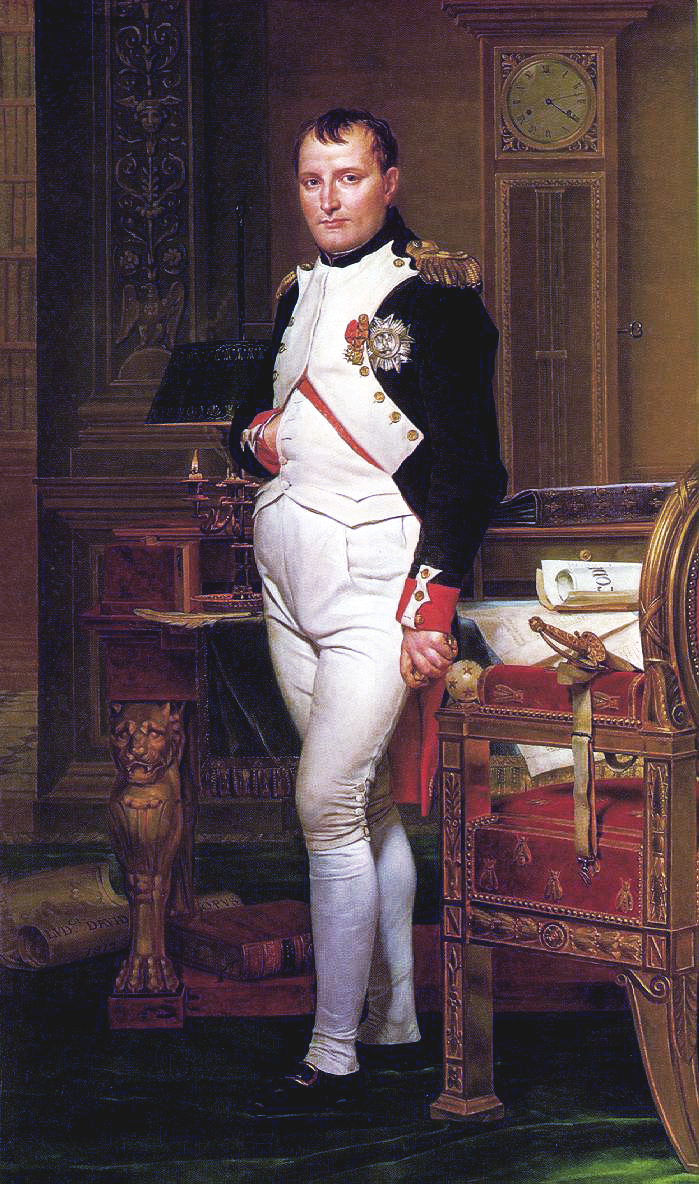 On 15th August 1769, Napoleon Bonaparte was born in the town of Ajaccio, on Corsica, a year after the island became a French territory. The wealth and political influence of his family enabled him to be schooled in mainland France. Initially he attended a religious school in Autun, then the military academy at Brienne-le-Château and finally the prestigious École Militaire in Paris where he trained to be a artillery officer.
In September 1785, Bonaparte became a second lieutenant in La Fère artillery regiment. During the early stages of the French Revolution, he returned to Corsica on an extended leave of absence, where he commanded a volunteer battalion in support of the radical revolutionaries. In 1793 Bonaparte published a pamphlet in favour of the republican cause which secured for him the support of Augustin Robespierre, the younger brother of the Revolutionary leader.
This patronage resulted in him being given the command of the artillery during the siege of Toulon, which British troops occupied. In recognition of Bonaparte's role in the successful assault on the city, the Republican authorities promoted him to Brigadier-General and gave him command of the artillery in the French army on the Italian border. Nevertheless, he spent a short time in prison in August 1794 following the fall of Robespierre due to his relationship with his brother.
After being released, Napoleon returned to military service but remained out of favour, losing his position as a general. Fortune smiled on Bonaparte again in 1795 when he took command of the forces defending the Republican government during a royalist uprising. In gratitude the new government, called the Directory, promoted him to Commander of the Interior and gave him command of the Army of Italy.
Successful campaigning in Italy brought Napoleon both fame and political influence. He then undertook a colonial expedition to seize Egypt and disrupt British access to India. The campaign proved to be a failure and Napoleon left an army ravaged by disease to return to France, where in 1799 he took part in a coup and became one of a number of provisional Consuls that ruled France.
Napoleon outmanoeuvred his fellow consuls and secured his election as First Consul for Life, effective becoming dictator. During a period of peace following the Treaty of Amiens, Bonaparte set about reforming the administration of France and repairing the infrastructure. During this period both Jacobins and Royalists plotted his overthrow, which gave him the excuse to revive the hereditary monarchy with himself as Emperor of the French. Bonaparte also placed his family and friends on the thrones of European states conquered by the French during the Revolutionary Words, including having himself crowned as King of Italy.
In 1805 the British persuaded the Austrians and Russia to join a coalition against the French. Napoleon gathered an army at Boulogne to invade Britain, but after failing to achieve naval dominance in the Channel he sent this Grande Armée to march into Germany. While the British dominated the seas, Bonaparte's army enjoyed a string of successes across Europe forcing the Austrians to sign a peace treaty. The British then formed a new coalition including Prussia but the dominance of Bonaparte's armies again resulted in the defeat of the continental powers, which he forced to join his Continental System to boycott British goods in a form of economic warfare. When Portuguese would not join the boycott Napoleon sent an army to invade Portugal with the support of the Spanish in 1807.
The Peninsular War marked the turning point in his fortunes as the English and Portuguese armies commanded by Arthur Wellesley, later the Duke of Wellington, drove the French back. In 1809, Austria broke its alliance with France opening a second front and further weakening the French. When the Russians failed to comply with the Continental System, Napoleon led the Grande Armée to invade Russia.
The disastrous campaign and humiliating retreat undermined Napoleon's rule. Following a series of further defeats and the capture of Paris by the Coalition, the Marshals of the French army confronted Bonaparte and forced him to abdicate. While peace negotiations took place between the French and the Coalition countries, Napoleon travelled into exile on the Mediterranean island of Elba. Napoleon retained the title of Emperor but his empire only comprised the island and its twelve-thousand inhabitants. After a failed suicide attempt Napoleon took charge of Elba creating a small military force and modernising the island.
After hearing that the Coalition were about to send him into exile on a remote Atlantic island, on 26th February 1815 Napoleon escaped captivity on Elba with around six-hundred men, arriving in France two days later. The 5th Infantry Regiment intercepted him at Grenoble, but rather than taking him into custody they acclaimed his as their Emperor. The return of Napoleon was similarly welcomed across much of France and he soon wrested the reigns of power away from the restored Bourbon monarchy.
With the loyalty of the senior army officers re-established, Napoleon marched in triumph into Paris on 19th March. After another series of constitutional reforms and mobilisation of the armed forces, he again took France to war against a new Coalition in a pre-emptive strike. His defeat at the Battle of Waterloo and his consequent surrender finally ended his reign. This time he was exiled on a remote island in the South Atlantic called Saint Helena, where he died in May 1821.
Related posts
Cisalpine Republic created: 29th June 1797
French Protestants granted freedom of worship: 8th April 1802
Louisiana Purchase Treaty signed: 30th April 1803
Prince Murat executed: 13th October 1815
13 February 2012
On this day in history: First French nuclear explosive test, 1960
 The French have a long association with nuclear research since the days of Marie Curie. In 1945 the French government created the Commissariat à l’énergie atomique (CEA) - the French Atomic Energy Commission - under the direction of the Nobel laureate Jean Frédéric Joliot-Curie. Nevertheless, Joliot-Curie's communist sympathies resulted in him being removed from his position before the beginning of the nuclear power programme in the 1950s.
In 1956 a secret committee met to review the possible military applications for atomic energy. Work began on delivery systems for nuclear weapons, but another year passed before President René Coty authorised the creation of the Centre Saharien d'Expérimentations Militaires (C.S.E.M.) - a military research facility in what was then the French Sahara. In 1958 the newly installed President Charles de Gaulle gave the final authorisation for France to develop a nuclear bomb, only the fourth country to do so after the United States, the Soviet Union and the United Kingdom.
At 7.04am on 12th February 1960 the scientists at C.S.E.M. conducted their first nuclear explosive test, codenamed Gerboise Bleue ("blue jerboa" - a jerboa is desert rodent). The scientists had mounted the pure fission plutonium implosion device on a 105 meter high tower near Reganne in the desert of Tanezrouf (now in Algeria). The resultant explosion was the most powerful first nuclear test by any nation with a yield of seventy kilotons. They conducted two other tests of much smaller devices in April and December of that year codenamed Gerboise Blanche and Gerboise Rouge - making up the three colours of the tricolore. In April 1961 the scientists detonated the final bomb in the programme, Gerboise Verte.
Footage of the Gerboise Bleue fireball.
Related posts
Rosenbergs executed: 19th June 1953
Nuclear Disarmament logo designed: 21st February 1958
Nuclear Non-Proliferation Treaty signed: 1st July 1968
Stanislav Petrov averted a nuclear war: 26th September 1983
10 February 2012
On this day in history: Treaty of Paris signed, 1763
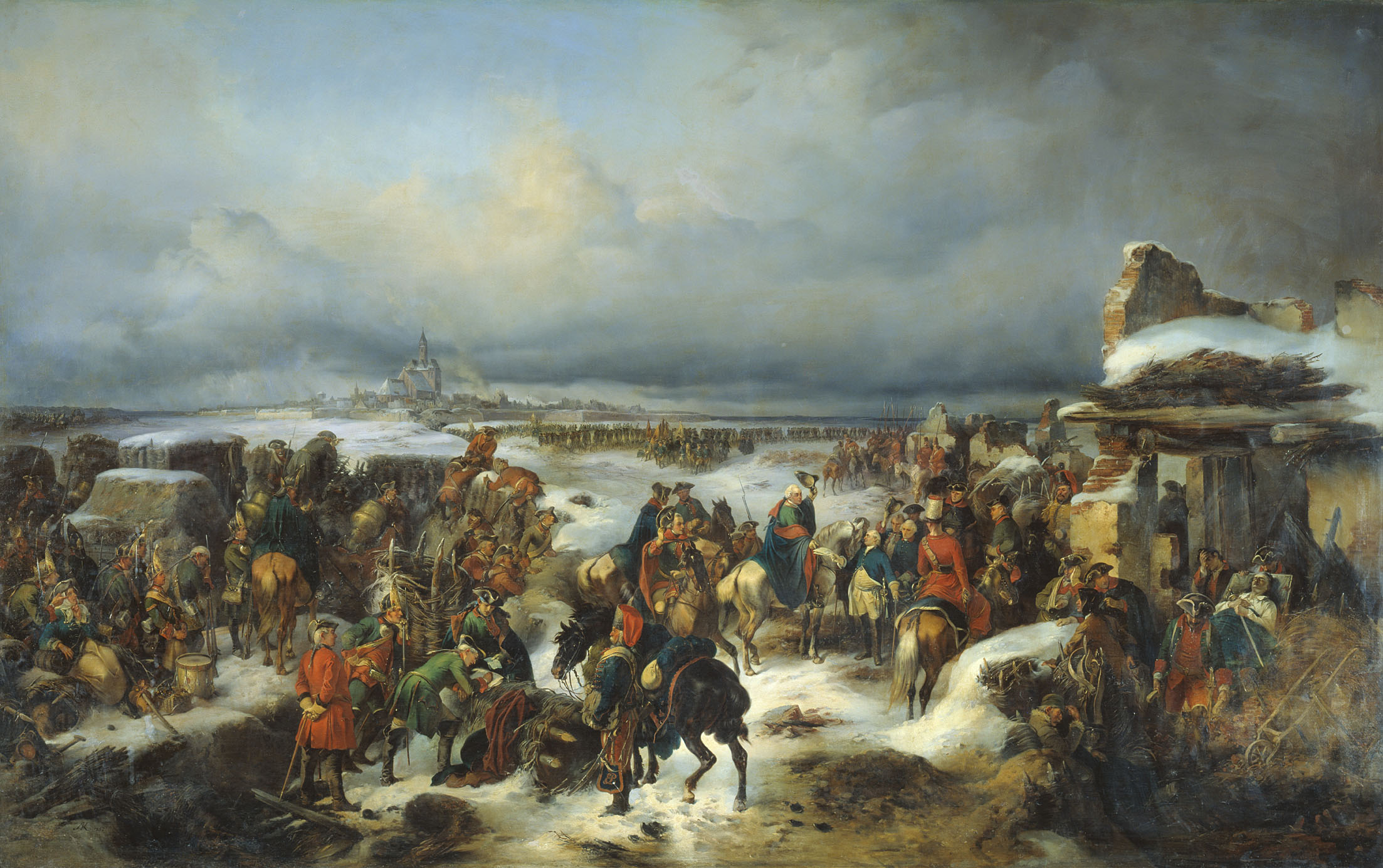 In 1756, Empress Maria Theresa of Austria formed a new alliance with Russia and France in order to recover territories lost to Prussia during the War of Austrian Succession, particularly Silesia. Meanwhile, the British no longer felt that the Austrians could contain French power in Europe. So rather than remain allied with the Austrians they signed a pact with King Frederick II of Prussia in return for his protection of Hanover - the ancestral home of the British royal dynasty - from French aggression.
Hostilities began when Frederick invaded Saxony, which was allied with the Austrians. The Austrians and their allies - France, Russia, Sardinia, Sweden and the Holy Roman Empire - declared war on Prussia, their German allies and Great Britain. While the Prussian army, which was the most formidable in Europe at that time, fought the Austrian alliance on land, the powerful British navy engaged the allies at sea.
To check British naval power in the Mediterranean, the French captured the British owned island of Minorca. War soon spread around the globe as British and French colonists fought in Africa, Asia and particularly in North America where they had been skirmishing for years. The deployment of British land forces to their colonies resulted in them making substantial gains at the expense of the French expanding their empire around the world.
In Europe, Portugal entered the fray on the side of the British and Prussians, and Spain joined the Austrian alliance. A series of Prussian defeats brought Frederick to the brink of disaster, especially when the British threatened to withdraw their financial aid. Fortunately for him, in 1762 the Russian Empress Elizabeth died. Her successor, Peter III , who was more friendly to the Prussians immediately withdrew his troops from the war and helped negotiate a peace between Frederick and the Swedes. Having lost an important ally and facing a reverse of fortunes on the battlefield, the Austrians had little choice but to negotiate a peace.
War weariness in Britain contributed to King George III's removal of the Duke of Newcastle's government and the resultant peace negotiations with France. On 10th February 1763, representatives of France, Great Britain, Spain and Portugal signed the Treaty of Paris, ending the conflict that is known as the Seven Years War in Europe, and the French and Indian War in America. The Treaty required a complex exchange of territories between the powers. The French had the choice of keeping either New France (Canada) or Guadeloupe in the Caribbean. They chose to keep the latter as a supply of sugar, but they also had to return Minorca to the British. The British also gained Florida from the Spanish, who received New Orleans and the western part of Louisiana from the French.
The text of the "Treaty of Paris (1763)" is available on the Yale Law School's Avalon Project web site.
Related posts
British Parliament expelled John Wilkes: 19th January 1764
Execution of Admiral Byng: 14th March 1757
Battle of Leuthen: 5th December 1757
Louisiana Purchase Treaty signed: 30th April 1803

 Posts